
Hearing protection: how to choose (and what NRR means)
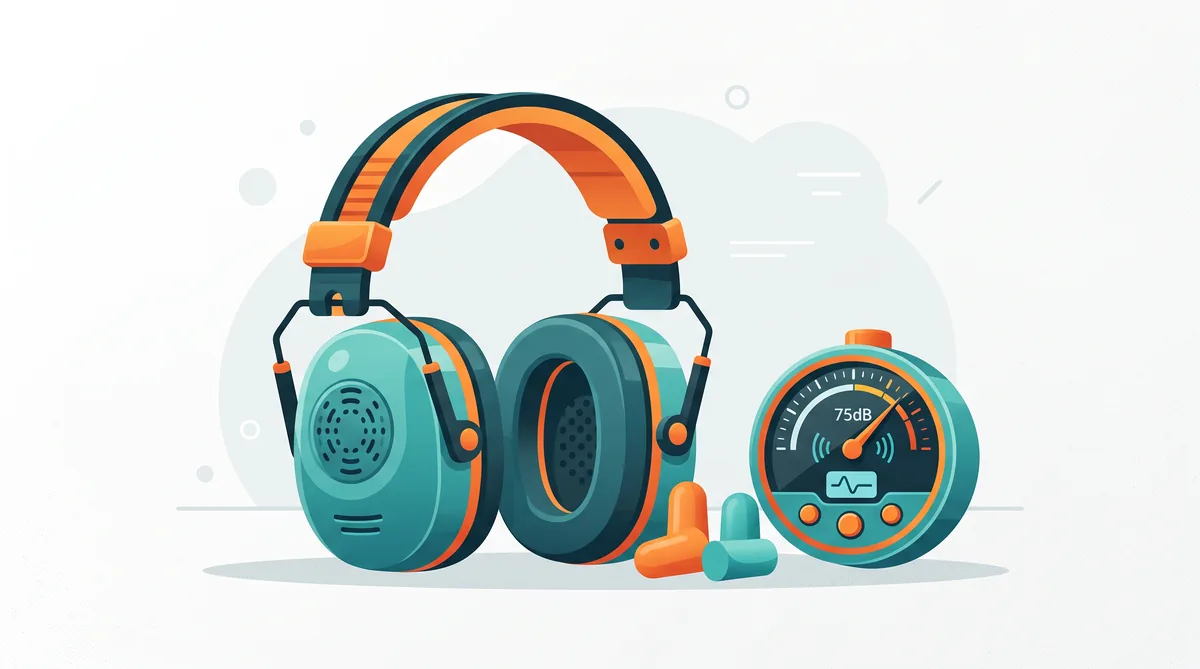
Hearing damage from noise is painless, gradual and permanent — and entirely preventable. The single most useful skill is reading a protector's rating correctly, because the headline number overstates what you actually get.
NRR vs SNR
The US uses the Noise Reduction Rating (NRR) in decibels; Europe uses the Single Number Rating (SNR). Both estimate attenuation, but neither is what you get in the field. OSHA recommends de-rating the NRR: effective reduction ≈ (NRR − 7) ÷ 2. So a 30 NRR muff gives about 11–12 dB in real use, not 30.
Try it: protection calculator
Estimate the level reaching your ear after de-rating.
Which type for which job
| Type | Typical NRR | Best for |
|---|---|---|
| Foam earplugs | 29–33 | Sleep, travel, DIY — highest raw attenuation, needs correct rolling & insertion |
| Filtered/musician plugs | ~20 (flat) | Concerts & musicians — reduces evenly so music stays clear |
| Passive earmuffs | 22–31 | Mowing, workshops — easy on/off, consistent fit |
| Electronic earmuffs | 22–26 | Shooting, machinery — amplify speech, clamp down on sudden bangs |
Hearing protection
For anything above 85 dB, rated protection matters. Look at the NRR (US) or SNR (EU) figure — real-world reduction is roughly (NRR − 7) ÷ 2.
As an affiliate we may earn from qualifying purchases. This never changes our data or recommendations.
How much do you need?
The goal is simple: get the level at your eardrum below 85 dBA. Read your exposure in the exposure calculator, subtract the de-rated protection, and check the result is under 85. For very loud environments (105 dB+), plugs plus muffs together add about 5 dB over the better device alone — the standard approach for firearms and heavy machinery.
Noise-cancelling headphones
Active noise cancellation (ANC) cuts steady low-frequency noise — planes, trains, HVAC hum — by 20–30 dB, letting you listen at safer volumes.
As an affiliate we may earn from qualifying purchases. This never changes our data or recommendations.
Frequently asked questions
How much does hearing protection actually reduce noise?
Can I double up plugs and muffs?
What NRR do I need?
Related
- Safe exposureYour daily dose
- SoundproofingReduce at the source
- Recommended gearOur picks
- Decibel chart0–194 dB
NoiseLevelDB is free, fast and independent. If it answered your question, you can support it with a small crypto tip — it keeps the data current.
Support the project →