
Noise laws by country
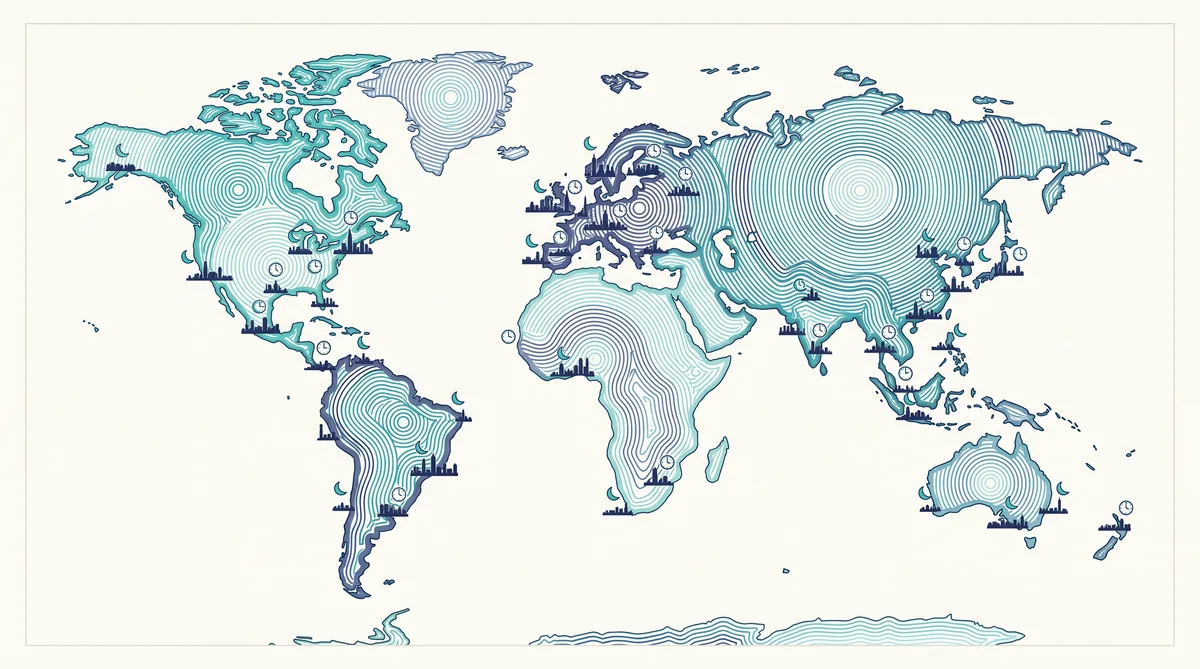
“How loud can I legally be?” has no single answer — it depends on where you live, the time of day and the zone (residential, mixed or industrial). This guide summarises typical national and widely-adopted municipal rules for education. Always confirm with your local ordinance before acting.
| Country | Daytime | Nighttime | Quiet hours |
|---|---|---|---|
| 🇺🇸 United States | 55–65 dBA | 45–55 dBA | Typically 10 pm–7 am |
| 🇬🇧 United Kingdom | ~55 dBA | ~45 dBA (34 dB indoors) | Night hours 11 pm–7 am |
| 🇨🇦 Canada | 55–60 dBA | 45–50 dBA | Commonly 11 pm–7 am |
| 🇦🇺 Australia | ~55–60 dBA | ~40–45 dBA | State-based; often 10/11 pm–7/8 am |
| 🇩🇪 Germany | 55 dBA | 40 dBA (residential) | Ruhezeiten: 10 pm–6 am, plus Sundays/holidays |
| 🇫🇷 France | +5 dB emergence | +3 dB emergence | Tapage nocturne: 10 pm–7 am |
| 🇳🇱 Netherlands | 50 dBA | 40 dBA | Night 11 pm–7 am |
| 🇮🇳 India | 55 dBA (residential) | 45 dBA (residential) | Night 10 pm–6 am |
| 🇯🇵 Japan | 55 dBA | 45 dBA | Local ordinance; commonly 11 pm–6 am |
| 🇳🇿 New Zealand | ~55 dBA | ~40–45 dBA | Council-set; typically night 10 pm–7 am |
The common thread
Three principles recur almost everywhere. First, night is protected: limits drop 10–15 dB after roughly 10–11 pm. Second, limits are often expressed relative to background (e.g. “+5 dB”) rather than as fixed numbers, because a rural night is far quieter than a city one. Third, enforcement is local even where the standard is national. When in doubt, a documented log plus a measured level is what moves a complaint forward.
Soundproofing & noise reduction
Mass and sealing beat foam. Acoustic panels tame echo inside a room; blocking sound between rooms needs mass-loaded vinyl, door seals and heavy curtains.
As an affiliate we may earn from qualifying purchases. This never changes our data or recommendations.
Choose your country
- 🇺🇸 United States55–65 dBA day · 45–55 dBA night
- 🇬🇧 United Kingdom~55 dBA day · ~45 dBA (34 dB indoors) night
- 🇨🇦 Canada55–60 dBA day · 45–50 dBA night
- 🇦🇺 Australia~55–60 dBA day · ~40–45 dBA night
- 🇩🇪 Germany55 dBA day · 40 dBA (residential) night
- 🇫🇷 France+5 dB emergence day · +3 dB emergence night
- 🇳🇱 Netherlands50 dBA day · 40 dBA night
- 🇮🇳 India55 dBA (residential) day · 45 dBA (residential) night
- 🇯🇵 Japan55 dBA day · 45 dBA night
- 🇳🇿 New Zealand~55 dBA day · ~40–45 dBA night
NoiseLevelDB is free, fast and independent. If it answered your question, you can support it with a small crypto tip — it keeps the data current.
Support the project →