
Soundproofing that actually works
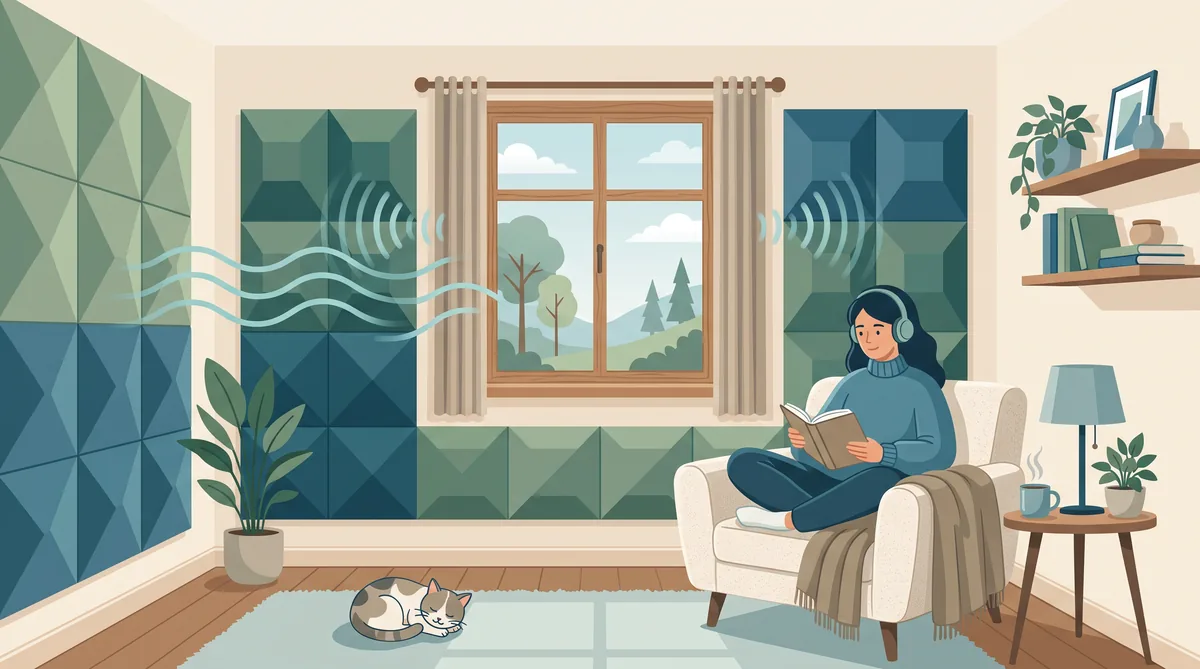
Absorption vs blocking — the crucial distinction
These are different jobs and different products. Absorption reduces echo and reverberation within a room — useful for recording, video calls or a boomy kitchen. Blocking (isolation) stops sound passing through a wall, floor or door. Most people buy foam expecting blocking and are disappointed, because foam does almost none.
What actually blocks sound
| Fix | Effort | What it does |
|---|---|---|
| Seal air gaps | Low | Door-bottom seals, acoustic caulk — sound leaks through the smallest opening, so this is the best value first step |
| Add mass | Medium | A second layer of drywall or mass-loaded vinyl (MLV) — mass is what stops airborne sound |
| Decouple | High | Resilient channel or isolation clips break the vibration path through the structure |
| Damping | Medium | Viscoelastic compound between two rigid layers converts sound to tiny amounts of heat |
Soundproofing & noise reduction
Mass and sealing beat foam. Acoustic panels tame echo inside a room; blocking sound between rooms needs mass-loaded vinyl, door seals and heavy curtains.
As an affiliate we may earn from qualifying purchases. This never changes our data or recommendations.
Where to start by problem
Noisy neighbour through a wall: seal every gap, then add mass (MLV or a second drywall layer). Echoey room / calls: absorption panels at first-reflection points. Traffic through a window: a heavy curtain plus a secondary glazing panel; the window is almost always the weak point. Footsteps from above: the fix belongs on the floor above (carpet, underlay) — very hard to solve from below.
If you cannot change the room
When you rent or can't modify the structure, the fastest relief is at your ears: good noise-cancelling headphones erase steady low-frequency noise (traffic, HVAC, aircraft) impressively well, letting you concentrate or sleep. They do little against sudden or speech-band noise, but for constant background they are transformative.
Noise-cancelling headphones
Active noise cancellation (ANC) cuts steady low-frequency noise — planes, trains, HVAC hum — by 20–30 dB, letting you listen at safer volumes.
As an affiliate we may earn from qualifying purchases. This never changes our data or recommendations.
Frequently asked questions
Does acoustic foam block noise from next door?
What is the cheapest effective soundproofing?
Do heavy curtains help?
Related
- Hearing protectionFor loud exposure
- Noise lawsYour legal options
- Sound meterMeasure the problem
- Recommended gearOur picks
NoiseLevelDB is free, fast and independent. If it answered your question, you can support it with a small crypto tip — it keeps the data current.
Support the project →